

FAQs
Frequently Asked Questions
What is the Sacred Military Constantinian Order of St. George?
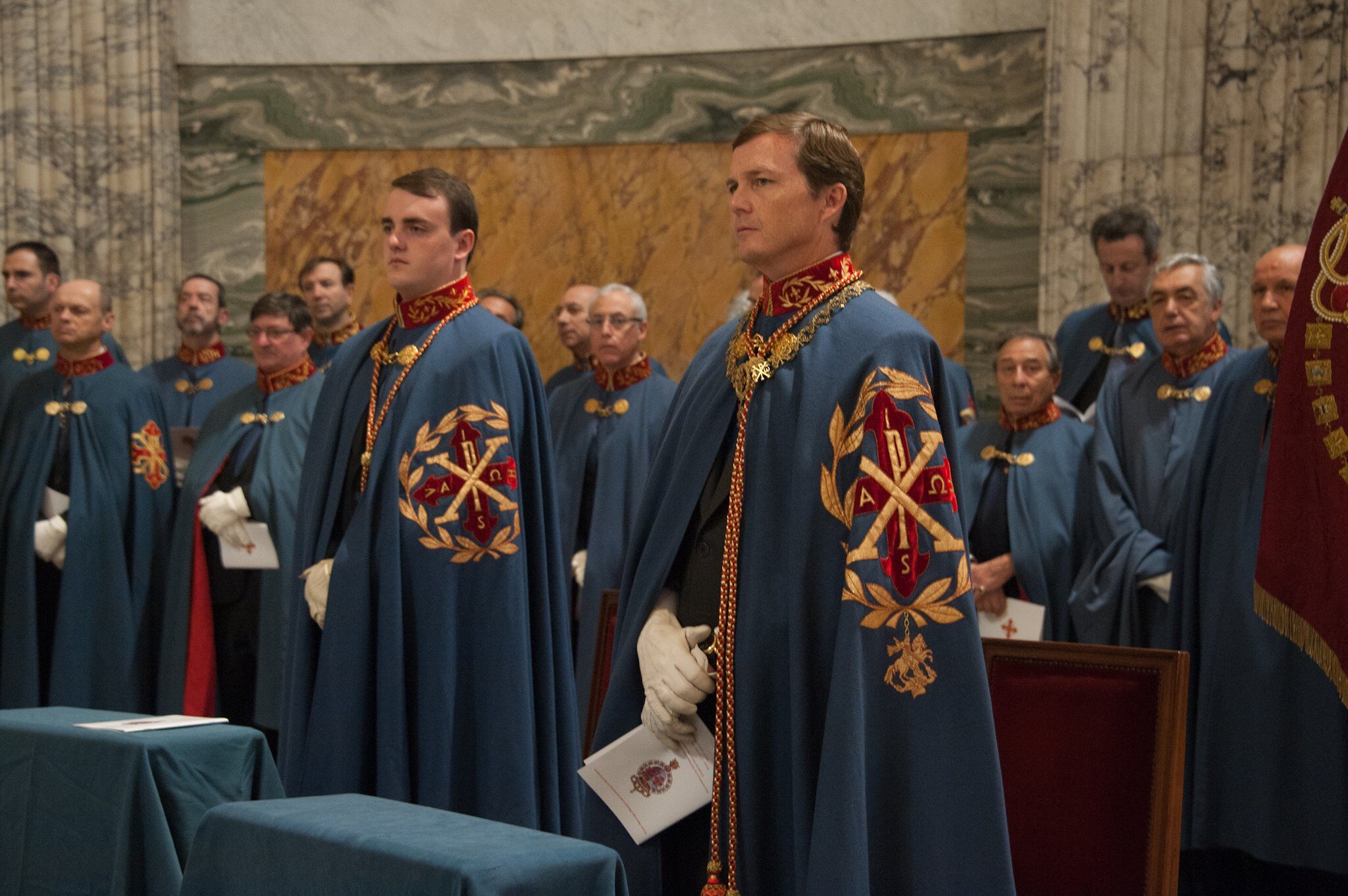
The Sacred Military Constantinian Order of St. George is an international Catholic order of chivalry. The Order received Papal recognition from the mid-16th century. Pope Clement XI confirmed it as a religious-military order in the 1718 papal bull Militantis Ecclesiae. In 1698 the grand mastership passed to the House of Farnese, and in 1731 to the Royal House of Bourbon, where it has remained ever since.
What are the charitable endeavors of the Constantinian Order?
The Order has carried out works of charity since the 16th-17th centuries. It fought at the siege of Vienna (1683) and against the Ottoman occupation of the Balkans (1716). It aided the poor and sick in southern Italy. During WWI and WWII it provided first aid and helped prisoners of war. Recently it assisted Syrian/Iraqi refugees, contributed to seminaries, provided humanitarian aid to Christians in the Middle East, and in 2022 sent ambulances and supplies to Ukraine.
Who is the Grand Master of the Constantinian Order of St. George?
The Grand Master is HRH Prince Don Pedro of Bourbon-Two Sicilies, Duke of Calabria. He holds the position by right of male primogeniture as the senior male-line descendant of King Ferdinand I of the Two Sicilies. He is also Head of the Royal House of the Two Sicilies, Grand Master of the Order of St. Januarius, and President of the Council of the four Spanish military orders under King Felipe VI.
How is the Grand Master chosen?
Succession passes by male primogeniture within the Royal House of Bourbon (heirs of the Farnese family). In 1698 Francesco Farnese acquired the grand mastership; Pope Innocent XII and Emperor Leopold I confirmed it to him and his heirs. In 1731 it passed to Prince Charles of Bourbon. The present Grand Master, HRH Prince Pedro, succeeded his father in 2015. The grand mastership is governed by canon law and is entirely separate from the Crown of the Two Sicilies.
What is the connection between the Constantinian Order and the Royal House of Bourbon of the Two Sicilies?
Since 1759, the Grand Mastership has passed by strict male primogeniture among descendants of King Ferdinand I of the Two Sicilies. Although all grand masters have been members of the Royal House of the Two Sicilies, the Constantinian Order is a dignity separate and independent from that House. It is subject to the Holy See, confirmed by Popes from the 16th to 20th centuries.
Why does another Prince of the Two Sicilies dispute the rights of the Grand Master?
HRH Prince Charles of Bourbon Two Sicilies (Duke of Castro) claims to be Grand Master, but his claim is mistaken. Prince Pedro is the senior living descendant by male primogeniture of Ferdinand I. Five independent Spanish state bodies unanimously concluded in 1983-1984 that Prince Pedro’s father was the legitimate heir. The Act of Cannes (1900), key to the Castro claim, was a conditional renunciation whose condition never came to pass.
How is the Grand Master related to other royal families?
The Grand Master is a prince of the Royal House of Bourbon. All four grandparents were Bourbons. He descends from King Charles X and Louis-Philippe of France, King Alfonso XII of Spain, King Ferdinand II of the Two Sicilies, and Duke Robert I of Parma. He also descends from King Pedro IV of Portugal, Emperor Pedro II of Brazil, and Emperor Leopold II of the Holy Roman Empire. His great-great-grandmother was a first cousin of Queen Victoria.
Is the Grand Master related to the British Royal House?
He is only distantly related to the current British Royal House. However, he has a unique connection to the Royal House of Stuart (Scotland 1371-1714, England 1603-1714). Some historians identify Prince Pedro as the possible senior living representative of the Stuart line under pre-1701 succession laws, due to the contested validity of a later uncle-niece marriage. Neither Prince Pedro nor Duke Franz of Bavaria has ever claimed British rights.
What are the key legal analyses on succession to the Constantinian Grand Mastership?
In 1983-1984, five of Spain’s highest state bodies (Council of State, Institute of Heraldry, Royal Academy of Jurisprudence, Ministry of Foreign Affairs, Ministry of Justice) unanimously concluded that Don Carlos, Duke of Calabria was the legitimate heir. In 1989, Lord Rawlinson of Ewell (former Attorney General of England) and Prof. Gerald Draper (former Nuremberg prosecutor) issued a detailed analysis reaching the same conclusion.
What is the Grand Master's relationship to the Spanish Royal House?
HRH Prince Pedro is a member of the Family of the King in Spain. His late father was a first cousin of King Juan Carlos. Prince Pedro is a second cousin of King Felipe VI and serves as President of the Council of the four Spanish Military Orders. Under the 1972 succession list (1876 Constitution), Prince Pedro was listed 7th and his father 6th in line. Today under the 1978 Constitution, Prince Pedro, his mother, sisters and children are defined as the Family of the King.